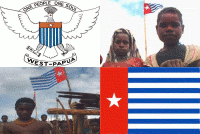
West Papua Exposed: An Abandoned Non-Self-Governing and Trust Territory
Executive Summary:
- The Commonwealth of Australia occupies the southern 90% of the Australian continent, the northern 10%, New Guinea (Papua if you're English) is the world's second largest island after Greenland.
- Due to an ongoing deception there is a legal fiction alleging America negotiated a 1962 agreement for the Dutch and United Nations to trade West New Guinea in exchange for peace with the Republic of Indonesia.
- But the agreement with Indonesian approval was developed in 1961 without Dutch knowledge, with intention of disregarding the legal purpose of the UN trusteeship mechanism which the US & Indonesia were using (Charter article 81 and 85 part 1) to enable UN and Indonesian administration without Papuan consent.
- The legal purpose of UN Charter Chapters XI, XII and XIII being the achievement of self-government according to the freely expressed wish of each non-self-governing territory.
- The 1959 & 1961 US proposal being appeasment via transfer of administration of a non-self-governing territory.
- The Indonesian purpose being denial of non-self-governing status and imposing Indonesian rule irrespective of consent.
- Yes, in isolation article 85(1) allows the General Assembly to authorise agreements, and article 81 allows the United Nations to also administrate a colony, but the Charter of the United Nations is not a buffet from which to cherrypick articles, these articles are part of Chapter XII and by using article 85(1) or 81 the whole of Chapter XII becomes applicable to West Papua; which is the reason that the Netherlands had to stop submitting article 73(e) reports when our governments authorised the agreement.
N.B. Unknown to the US government, the Freeport mining company was seeking an Indonesian license since 1959 for West Papua's vast gold and copper reserves, and the advice to appoint McGeorge Bundy as the US National Security Adviser had come from a director of the mining company. Although Kennedy had discarded the “special United Nations trusteeship” proposal for nine months, during December 1961 he succumbed after Indonesia successfully got its friend U Thant appointed as UN Secretary General in control of Security Council and other UN agenda.
The main issue of law being current United Nations obligation due to imposing itself since 1962 on a non-self-governing territory universally recognised in General Assembly resolution 448 (V).
One page Legal Brief - Outlining the legal structure of UN Trusteeship agreements, and its apparent relationship with West Papua
N.B. All pages at un.org include an extensive
"Terms of Use" Dislaimer
warning that the content of un.org pages may be incorrect and should not be relied on for legal or important issues. Of acute concern is UN.ORG misrepresention of the function of the Trusteeship Council which has never supervised trust territories, the Council prepares UN Charter article 88 reports, the supervision of trust territory administration is by the General Assembly under Charter article 85(1) or by the Security Council under article 83(1). The Trusteeship Council continues normal function responding to items put on its agenda; e.g.
1998
.
.
.
.
.
2023, and produced 1995
Rules of Procedure specifically for the purpose of continuing to respond to items put on its agenda.
Griffith Journal of Law and Human Dignity,Volume 6 Issue 2, 2018
West Papua Exposed: An Abandoned Non-Self-Governing or Trust Territory
Abstract
This paper examines the shift in legal status under the United Nations Charter, with the transfer of West Papua from the Netherlands to the United Nations in 1962 via the 'Indonesia and Netherlands Agreement concerning West New Guinea (West Irian)'. It advances that this agreement must be a Trusteeship Agreement shifting West Papua's legal status from a Non-Self-Governing Territory of the Netherlands to a Trust Territory of the United Nations. As such, the United Nations with work of the Trusteeship Council was, and remains, responsible to ensure the West Papuan people attain self-government or independence as required under Article 76(b) of the Charter.
Link: Bhasa Indonesian - A translation of paper in Bahasa Indonesian.
Why West Papua should be on the Trusteeship Council agenda today...

UK barrister Charles Foster talking about United Nations trusteeship at the "Road to Freedom" conference in 2011.
He realised in 2011 that there is some kind of UN trustee obligation, the only thing he did not realise is that
the 'New York Agreement' itself is a UN trusteeship agreement as required & defined in Chapter XII of the Charter,
that the United Nations (under influence of U Thant) and Indonesia have been lying about which type of agreement it is:
<iframe width="450" height="254" src="https://www.youtube.com/embed/niua7MaVkwo" frameborder="0" allow="accelerometer; autoplay; encrypted-media; gyroscope; picture-in-picture; fullscreen" ></iframe>
Or download his quick verbal explanation as a Mpeg4 or Webm
Additional references:
- 1945 Charter of the United Nations, see Link.
- 1959 idea to exploit UN trusteeship for benefit of Indonesia instead of West Papua,
Link
- - Oct 1960 - after discovery neither Australia nor Malaysia are willing to act as the temporary administrator who would
allow Indonesia to assume administration, the plan is changed to ask the United Nations to act as temp' administrator as well
as trustee, Link
- 1961 Indonesians say they like to mis-use trusteeship but do not want to call
the UN trusteeship a trusteeship,
Link
- 1962 January, Dutch asking Australia for help against American concept of trusteeship for West Papua, Link
- 1962 April 12, United Nations legal advice regarding 'Bunker plan' or 'New York Agreement',
Link page-2
- 1962 September 21, Australia's closing remark at General Assembly about a relationship between the New York Agreement and the Charter of the United Nations,
Link
- 1962 September 21, Indonesian friend denying that West Papua is now a United Nations Trust territory,
Link
N.B. Why would India spend time trying to convince others not to call the New York Agreement a trusteeship, unless it does look, sound and act like a trusteeship. Is the agreement really "ad hoc" as he claims, no, it has taken nine months of negotiations at instigation of the new
Secretary General to prepare the agreement.
- 1962 September 21, full UN record of the General Assembly meeting authorising
UN occupation of West Papua,
it is the final item 89 begining on page 49,
Link
- Current legal status relationship of Indonesia to West Papua (the last UN business record about the territory),
Link
- 1995 Rules of procedure of the Trusteeship Council,
Link.
Referensi tambahan:
- Piagam Perserikatan Bangsa-Bangsa 1945, lihat Tautan.
- Ide 1959 untuk memanfaatkan perwalian PBB untuk kepentingan Indonesia, bukan Papua Barat, Link
- - Okt 1960 - setelah ditemukan baik Australia maupun Malaysia tidak bersedia untuk bertindak sebagai administrator sementara yang akan mengizinkan Indonesia untuk mengambil alih pemerintahan, rencana diubah untuk meminta PBB untuk bertindak sebagai administrator sementara dan juga wali, Link
- 1961 Orang Indonesia mengatakan mereka suka menyalahgunakan perwalian tetapi tidak ingin menyebut perwalian PBB sebagai perwalian, Link
- 1962 Januari, Belanda meminta bantuan Australia untuk mencegah konsep Amerika menggunakan perwalian untuk West Papua, Link
- 1962 12 April, nasihat hukum Perserikatan Bangsa-Bangsa mengenai 'Bunker plan' atau 'New York Agreement' yang mengimplementasikan pasal 81 ketentuan Sistem Perwalian Internasional, Tautan
- 1962 21 September, pidato penutup Australia di Majelis Umum tentang hubungan antara Perjanjian New York dan Piagam Perserikatan Bangsa-Bangsa, Link
- 1962 21 September, teman Indonesia menyangkal bahwa Papua Barat sekarang menjadi wilayah Perwalian Perserikatan Bangsa-Bangsa, Link
N.B. Mengapa India menghabiskan waktu mencoba meyakinkan orang lain untuk tidak menyebut Perjanjian New York sebagai perwalian, kecuali jika memang terlihat, terdengar, dan bertindak seperti perwalian. Apakah kesepakatan itu benar-benar "ad hoc" seperti yang dia klaim, tidak, sudah sembilan bulan negosiasi atas dorongan Sekjen baru untuk menyiapkan kesepakatan.
- 1962 21 September, catatan lengkap PBB tentang pertemuan Majelis Umum yang mengesahkan pendudukan PBB atas Papua Barat,
itu adalah item terakhir 89 dimulai pada halaman 49, Tautan
- Hubungan status hukum Indonesia dengan Papua Barat saat ini (catatan bisnis PBB terakhir tentang wilayah tersebut), Tautan
1995 Tata Tertib Dewan Perwalian, Link.
Historical note:
For fifty years the public story about the 1962 'New York Agreement' was a deception,
the agreement was not written after the Indonesian invasion in 1962,
the agreement was proposed by an American lawyer in May 1959,
modified in 1960, and proposed to Indonesia by March 1961.
The Agreement does not sell or trade West Papua,
it is an agreement by members of the United Nations asking other members to jointly accept
responsibility for the welfare of the West Papuan people (trusteeship),
and is also asking the United Nations to become the "administrator" (occupying force) in 1962.
The United Nations said yes and then appointed Pakistani troops in 1962
and Indonesia since 1963 to administrate West Papua.
Indonesia is only an UN appointed administrator,
Indonesia does not have any rights to impose its own laws or take any resources from Papua.
Both Indonesia and the United Nations are responsible for whatever Indonesia does in West Papua.
Both America and the United Nations are responsible for whatever America does in West Papua,
and so forth with all the nations that have interfered with West Papua since 1962.
Evidence suggests that the Americans who from 1959 to 1961 supported the proposed agreement were friends of the Freeport mining company.
Records (not listed above) show that from March until December 1961 the friends of Freeport could not get the new American President John F Kennedy to agree to the proposal.
Records also show that six months after Indonesia was told about the idea to pervert the United Nations trusteeship system,
the UN Secretary General was lured to the Congo and killed which enable Indonesia's friend U Thant with help from Indonesia to become
the new UN Secretary General.
It was U Thant who pressed America and the other nations during 1962 to support the wrongful use of the International Trusteeship System,
a.k.a. the 'New York Agreement'.
Although the 1962 agreement has been drafted in accord with rules or text of the Charter of the United Nations,
and the UN occupation is permitted by Chapter XII of the Charter,
it is not legal for news of the agreement & UN action to be withheld from the agenda of the UN Trusteeship Council.
Article 85 of the Charter imposes an obligation to put news of any UN trusteeship such as the 1962 'New York Agreement' on
the agenda of the Council with intention that the Council could then begin preparing yearly reports about the welfare and
progress towards independence of each Trust territory.
N.B. This briefing is limited to the UN Trusteeship issue alone and can not attempt to address the array of purported human rights abuses during the UN appointed administration, however a 2004 Yale Law School concerning the administration may asist an initial understanding of the topic. Likewise the 1969 "Act of Free Choice" is also not required for establishing the apparant United Nations legal obligations, however paragraph 44 of the 1969 General Assembly plenary meeting 1812 debate is noteworthy in quelling Indonesian claims, and Indonesian legal arguments appear to conflict with the Indonesian Consitution article 1(2) public sovereignty, 28(c) development of nations and states, 28(D)(1) right to law such as ICJ advice, and to Indonesia's UN Charter legal obligations as a member of the United Nations.
5 minute Video:

A brief historical summary of situation, explains how this subjugation of West Papua has occured
.
|